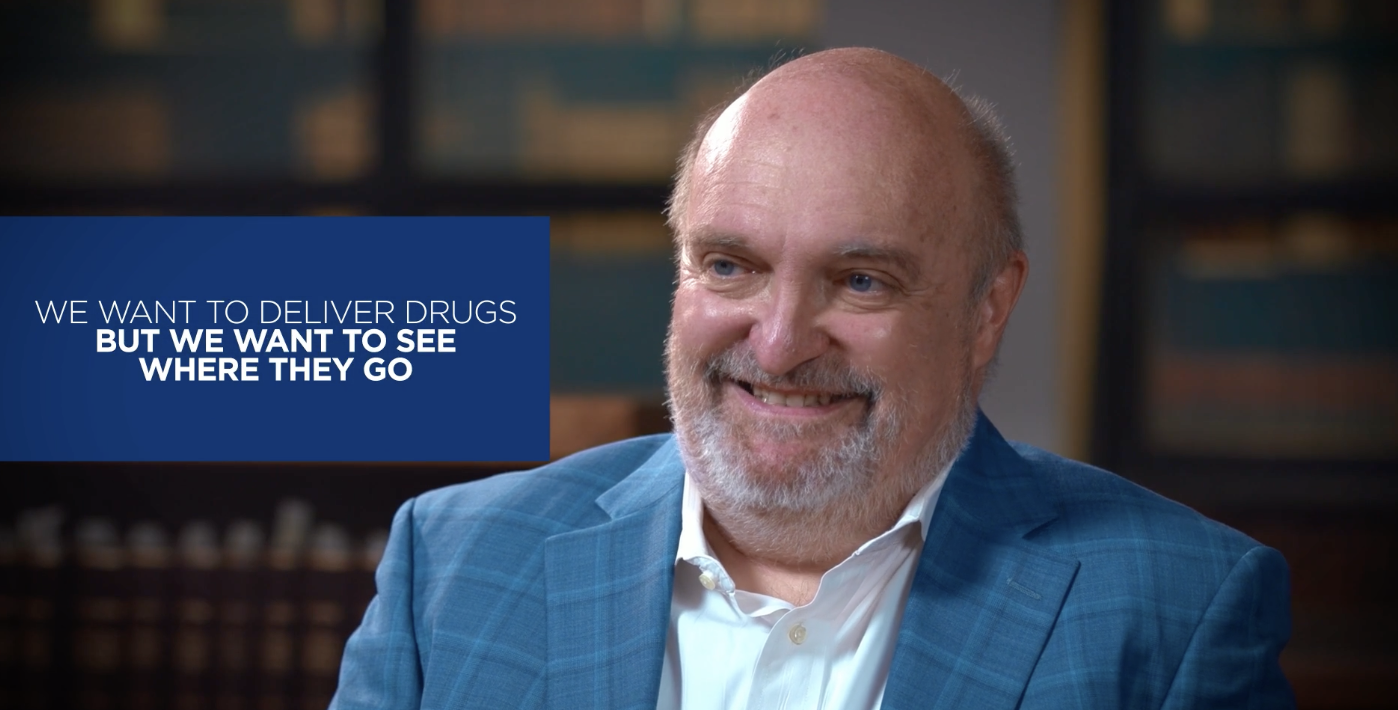
By identifying cancer earlier and providing new ways to target tumors, the work of Stefan Bossmann, PhD, University Distinguished Professor of Kansas and Chair of the Department of Cancer Biology at the University of Kansas Medical Center, aims to address two important challenges in cancer treatment: knowing where cancer is and finding it before it becomes more difficult to treat.
His research focuses on developing nanoparticles that can deliver drugs to tumors and metastases while also showing where those drugs go. He is also developing liquid biopsy technologies that use samples such as blood serum or saliva to detect solid tumors at very early stages.
A key part of Bossmann’s research involves graphene-based nanoparticles designed to react with enzymes that are overexpressed in cancer. His work with regional collaborators has focused on developing more consistent graphene, addressing one of the challenges that has limited the application of nanotechnology in medicine. “This is allowing us to construct nanobiosensors which are so sensitive that they can detect solid tumors at stage one or earlier,” Bossmann says. The research demonstrates how advances in materials science can open new possibilities for cancer diagnostics.
Moving discoveries from the laboratory toward clinical applications requires collaboration among researchers, companies, investors, and other partners. At the University of Kansas, the Institute for Advancing Medical Innovation helps bridge that gap and support the translation of new technologies. For Bossmann, collaboration is central to what comes next: “As long as we have a common language, as long as we are funded, and as long as we work together, we will discover many, many things.”